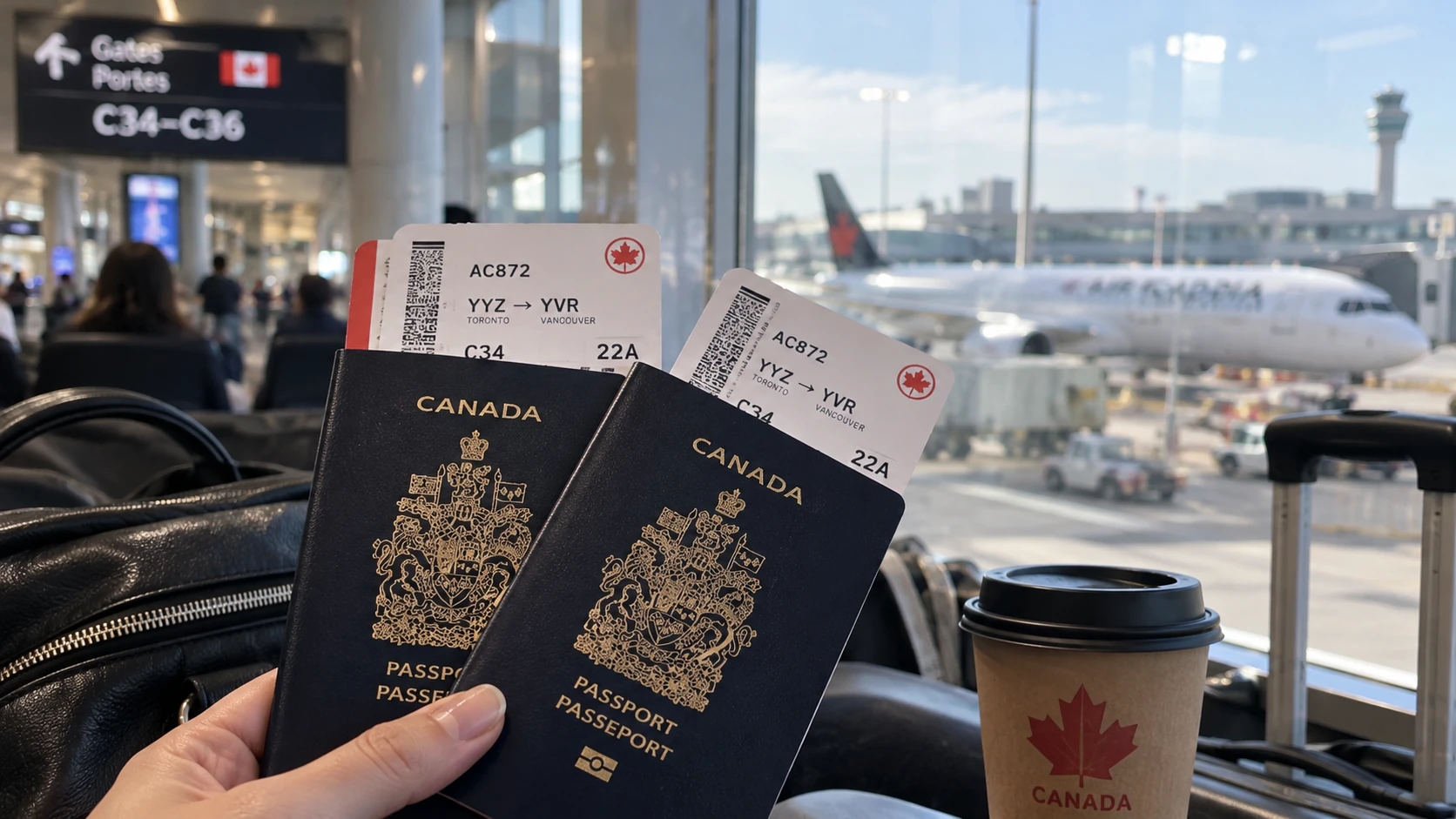
A document check begins with the person travelling and the route they plan to take. Citizenship, the documents held, the mode of transport and the places on the itinerary all belong in that review. Start with your own circumstances rather than borrowing a conclusion from someone else’s trip.
You can make the review easier by separating it into a few short questions. Keep the official source beside each answer, and leave unresolved details visible until the appropriate authority or carrier has clarified them.
Compare the booking with the document
Read the booking and identification side by side. The federal pre-boarding guidance says names must match across identification, the ticket and boarding pass. If you notice a difference, ask the carrier what to do before departure.
Do not edit a document or assume that an informal explanation will resolve a discrepancy. Record the carrier’s instructions with the booking. This small review is about finding a question while you still have the opportunity to ask it.
Give a domestic flight its own check
A passport is one accepted identification option for domestic air travel in Canada. It is not the only option. The official identification page sets out alternatives for people with Canadian ID and for those without it.
Use that guidance for the traveller and documents involved. A photograph of a Canadian passport in a travel article does not mean one is required for every trip. Keep the scope of the answer precise: a domestic identification check does not settle the requirements for an international leg elsewhere in the itinerary.
Read international requirements individually
For travel abroad, check passport validity against the destination’s rules. The government checklist frames this as a destination-specific review. It does not establish one validity period for every country.
The visa and authorization guidance also directs readers to the destination’s entry information and embassy or consulate confirmation. Write down what you need to verify, including any authorization question. A passport, a booking and an entry requirement should each have their own place in your notes.
Include the places between the endpoints
Read each transit location as part of the route. The Government of Canada’s travel-advice explanation expressly includes places travellers transit through.
Ask questions that describe your actual arrangement: which country is involved, what transport you are taking and whether your plan includes leaving the airport. Take those details to the relevant official guidance. Avoid reducing the question to “only a connection”; that phrase alone does not describe the journey well enough for a useful review.
Prepare the return at the same time
Canadian citizenship and Canadian permanent residence are different document situations. IRCC’s entry guidance distinguishes them and explains how transport mode affects what is needed. In particular, permanent residents returning by commercial transport need a valid PR card or permanent resident travel document.
Read the section that applies to you before leaving. Do not assume that a document used on one leg answers every question on another. Keep the return review beside the outward one, where it remains part of the plan.
Keep backups useful and secure
Decide how you will retrieve your important confirmations if your preferred device is unavailable. A secure offline copy or a carefully stored printout can be part of that plan. Use only the personal information necessary for the purpose.
Backups help organise the journey; they do not replace original documents or official instructions. Keep the current version easy to identify, and direct any remaining document question to the appropriate authority. The goal is an orderly review, not a collection of unanswered screenshots.
THE ORIGINAL INFORMATION
Keep the source close.
Official resources reviewed 12 October 2026. Open the responsible source for its current conditions and full instructions.